
Shafts
Why long shafts are quenched and tempered before finish turning
Turning a shaft to drawing is not difficult. Keeping it inside tolerance two months later is. The process order for a long shaft is really a race against distortion.
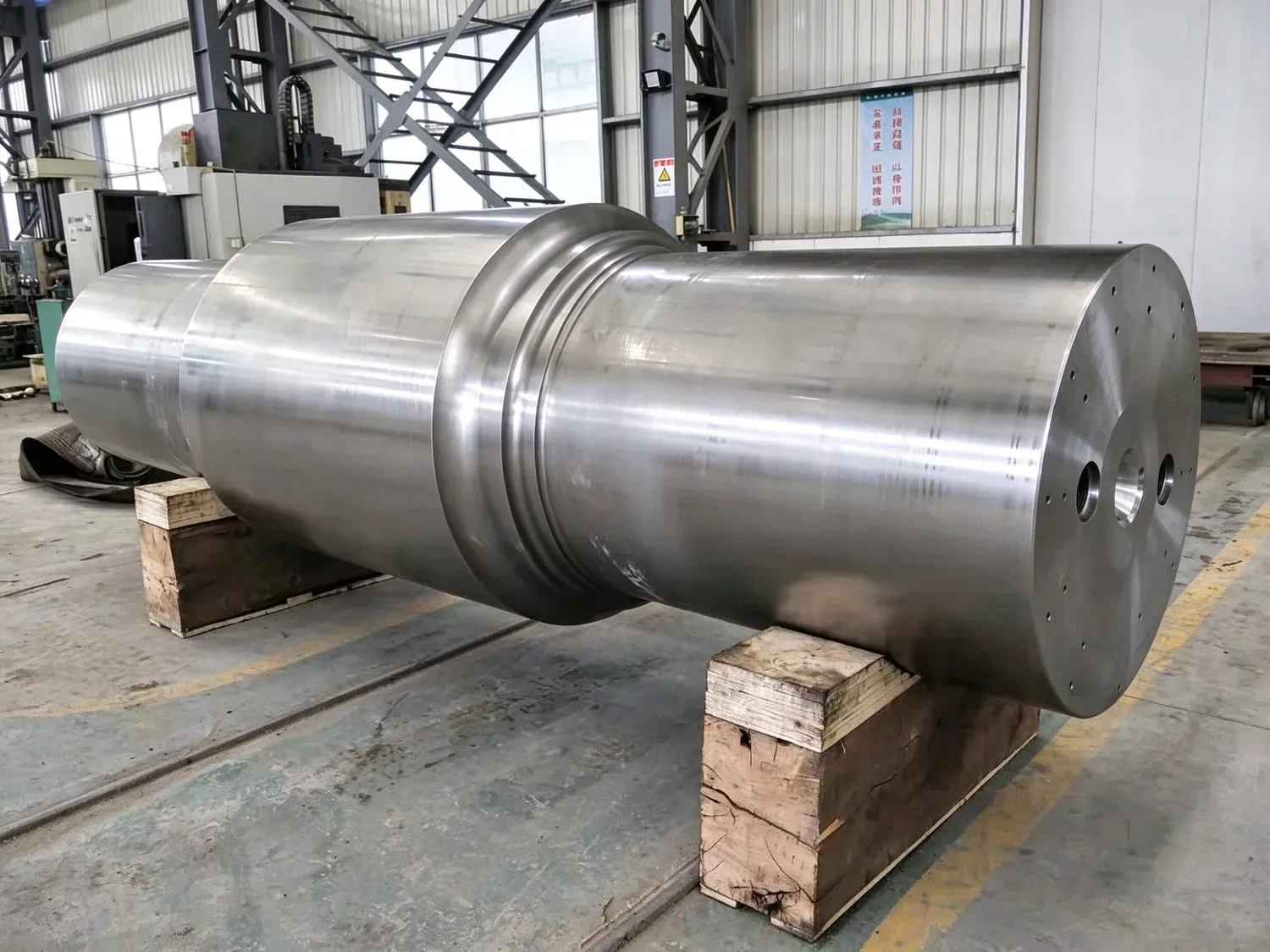
Where the movement comes from
A long shaft moves for several reasons: forging or rolling stress left in the blank; cutting heat and clamping force during turning; volume change from the microstructural transformation in heat treatment; and sag under its own weight. The last one dominates on a long, small-diameter shaft.
If you rough turn and then finish to size, the first stresses keep releasing while the shaft sits and while it is machined, and the shaft bends. The closer the size runs to the edge of the tolerance band, the less bend it takes to put the part out.
The order we follow
Cutting, forging, normalizing or annealing, rough turning, quenching and tempering, semi-finish turning, finish turning, grinding, ultrasonic inspection and final checks.
- 01
Rough turning
Stock removed in steps, leaving 3–5 mm so the first round of stress can go.
- 02
Quench and temper
Hardening followed by high-temperature tempering gives a uniform tempered sorbite and sets the structure up for later machining and surface hardening.
- 03
Finish turning
Cut with a steady rest, controlling depth of cut and feed to limit tool deflection and chatter marks.
- 04
Grinding
Stock left on bearing and seal seats; rough and finish grinding kept apart so grinding heat does not reintroduce stress.
- 05
Inspection
Forged shafts are ultrasonically tested before finish machining, so internal defects surface early.
What we check
Three checks before a long shaft ships: ultrasonic test, hardness, runout.
- 01
Ultrasonic testing
Looks for inclusions, cracks and flakes inside the forging. The report ships with the part.
- 02
Hardness
Read at several points across the section after tempering; evenness shows whether the treatment reached the core.
- 03
Radial runout
Measured along the full length on V-blocks or between centers. The bad case is a shaft that is straight at both ends and bent in the middle: it will vibrate once it runs.
What the drawing leaves out
Shaft drawings often carry dimensions and tolerances only, with no heat-treatment or inspection requirement. When that is missing we raise it at drawing review rather than explaining afterwards that we used the default process.
If the shaft takes a bearing or a coupling, confirm fits, keyway position and shoulder radii before the order starts. Changing those later means starting the shaft again.
These notes describe processes we actually run. If you have a part to quote, send the drawing and we will answer with the process, the lead time and the tolerance we can hold.
Send drawing, get a quote