Bearings & Machined PartsCouplings
Friction Torque Limiter (Adjustable Overload Clutch)
A mechanical overload clutch that slips when torque exceeds a preset limit and re-engages automatically, protecting motors, gearboxes and driven parts from jam damage.
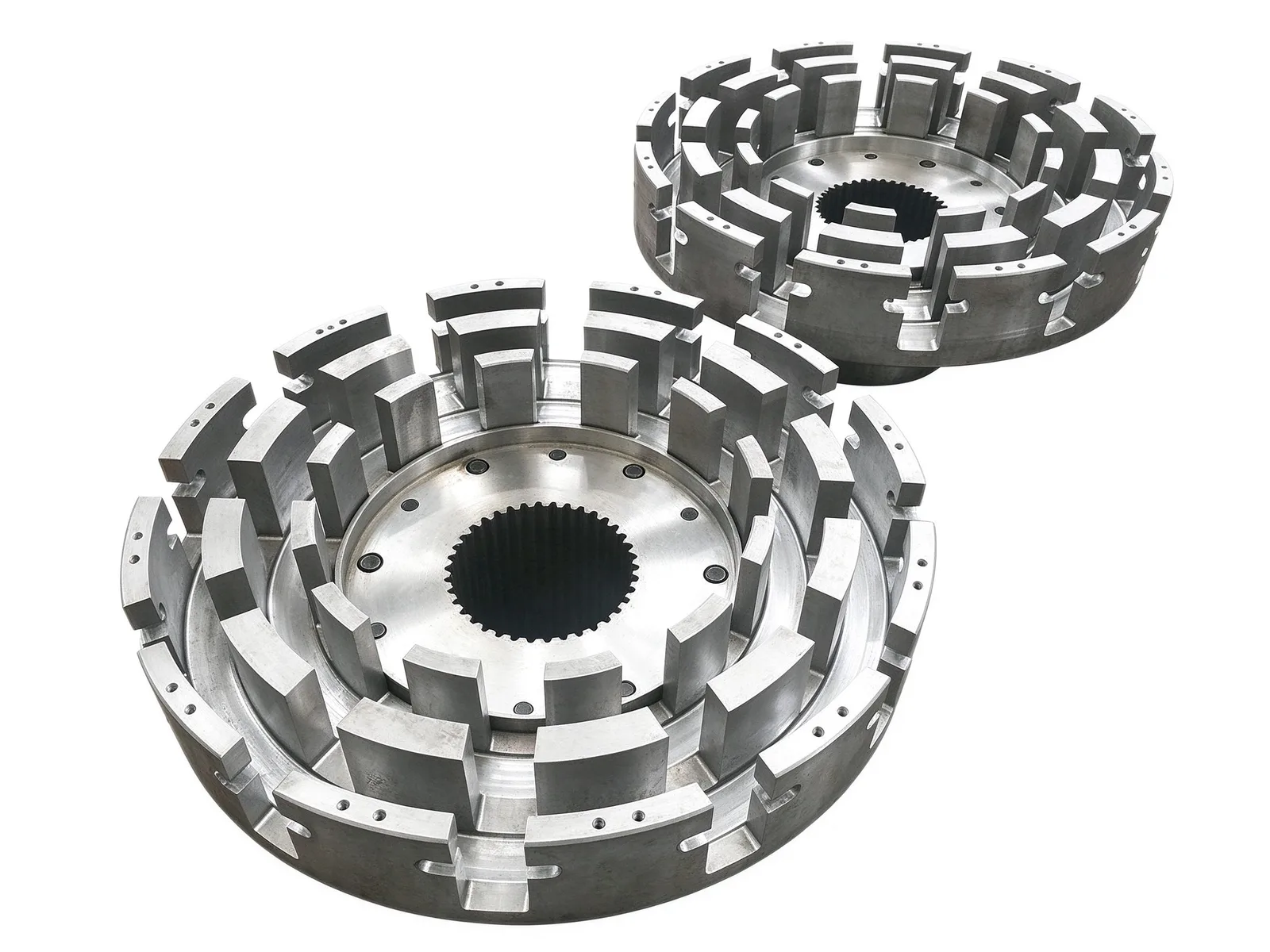
Components machined in-house
The limiter is built around a machined hub, a stack of hardened steel friction plates and a flange body. Bores, keyways and splines are cut to the customer's shaft drawing, so the unit mounts without an adapter sleeve.
Disc springs are stacked to give the required spring rate, and the locking nut holds the preload setting. Friction plates are ground flat so the slip torque stays repeatable over many cycles.
Setting the trip torque
Release torque is set by adjusting the pressure on the disc spring stack with the locking nut. Once set, the same value can be repeated on every unit of a batch.
When a jam occurs, the plates overcome static friction and slip, disconnecting the drive while the motor keeps running. As soon as the obstruction is cleared, the plates re-engage and the machine restarts without replacing shear pins.
Typical applications
Used on conveyor systems, packaging and bottling machines, automated assembly lines, printing presses, material handling equipment, agricultural machinery and machine tools.
Specifications
- Torque setting
- Adjustable via disc spring preload, secured by locking nut
- Reset
- Automatic re-engagement after the overload is cleared
- Friction stack
- Hardened steel friction plates with disc springs
Common questions
- Can you machine this part to my drawing?
- Yes. Every part is quoted from the drawing. Send a PDF, DWG, DXF, STEP or IGES file with the material, quantity and any inspection requirements, and we reply within one working day.
- How are the material and heat treatment decided?
- They follow your drawing. The specification table shows the range normally used for this part type; the final material and heat treatment are confirmed with the quotation.
- What lead time and inspection come with the part?
- Lead time is set in the quotation and depends on material, size, quantity and inspection scope. Material verification, in-process checks and final inspection records are archived with the part, and any extra certification is agreed before production.
- How is the part packed for export?
- Export parts are rust-proofed and packed for the transport method and destination confirmed in the quotation, with lifting points and markings agreed before dispatch.
Every part is quoted from the drawing itself, not from a size band. Send it over and we answer with the process, the lead time and the tolerance we can hold.
Quote this part