
Technical articles
HPGR rolls: rebuilding the wear layer instead of the whole roll
An HPGR roll usually comes out of service because the wear layer has gone, not because the shaft has. Rebuilding keeps the shaft, the bearing seats and the hydraulic interface, and restores only the surface that does the work.
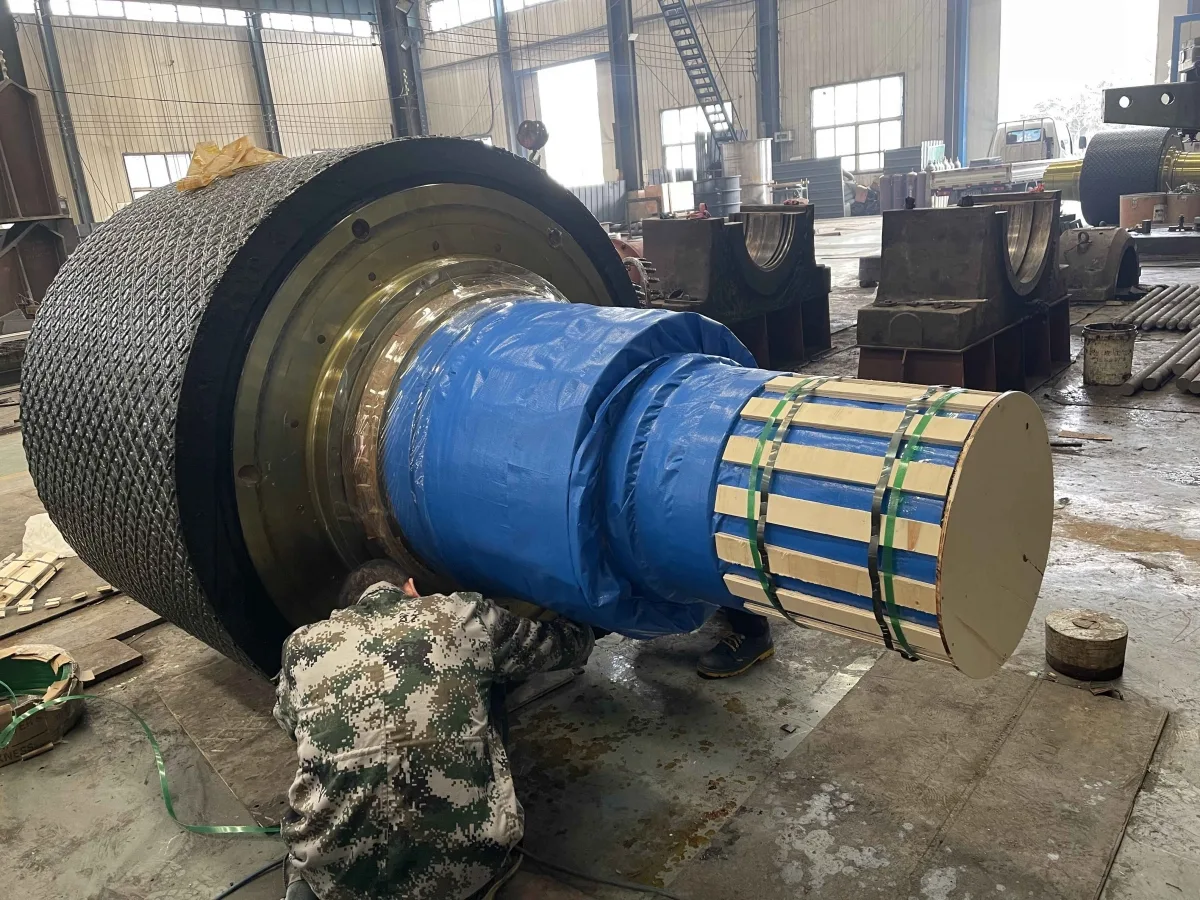
The shaft is usually still good
A high-pressure grinding roll is a press rather than a crusher in the usual sense. Two rolls turn towards each other, and the material bed between them takes the load. The shaft transmits torque and holds the roll in its bearings; the studded surface does the size reduction. When the surface is worn, the shaft, the journals and the hydraulic connection are often still within tolerance. Replacing the whole roll at that point throws away the most expensive part of the assembly.
That is why a rebuild starts with the question of what is still usable. The answer is not decided by the wear pattern alone. It comes from measuring the shaft, the bearing seats and the journals, and from comparing those readings with the drawing. The hydraulic interface is part of the same assembly. It is the connection through which the grinding force reaches the roll, and it is checked before the work is quoted, because a damaged interface changes the scope of the rebuild.
What is checked before anything is cut
Each HPGR roll is inspected for stud condition, edge wear and shaft runout before anything is cut. The three checks answer different questions.
Stud condition decides how much of the surface has to be renewed. Studs are replaced or re-welded, and the inspection has to separate a missing stud from a broken one and from a stud that is still in place but no longer holds. Edge wear is measured around the rim, because the profile at the edge is where the roll loses its shape first. Shaft runout is taken at the journals: if the roll no longer turns true, no amount of work on the surface will bring the profile back.
The bearing seats are checked in the same inspection. A seat that has fretted has lost its fit over an area, not at a single point, and that changes the decision from rebuild to replace.
Rebuilding the wear layer
The worn layer is built up, and the profile is machined back to the drawing tolerance. Studs are replaced or re-welded as the inspection requires. The finished surface has to match the drawing, not the worn surface that came in, which is why the build-up volume is quoted from the drawing and the measured wear rather than from a nominal figure.
The built-up layer is not simply a patch. It becomes the working surface of the roll, so it has to carry the same load as the original layer and hold the stud pattern in the right place. Hardness and soundness of the new layer are checked before the roll goes back into service.
Bearing seats and journals
The bearing seats and journals decide whether a rebuild is worth doing. A worn journal can be built up and re-machined instead of replaced. A fretted bearing seat is a different case: the housing no longer clamps the bearing correctly, and re-machining the seat changes the fit against a standard bearing.
For that reason the seats are measured before the rebuild is quoted, not after the surface has been cut. If the seats are outside tolerance, the roll is treated as a replacement rather than a repair, and the quotation says so.
When to replace rather than rebuild
Rolls for high-pressure grinding rolls are replaced rather than rebuilt when the shaft runout is out of tolerance or the bearing seats are fretted. At that point a new assembly, supplied with bearing housings and seals, is the shorter route.
The hydraulic interface is part of the same decision. A rebuild keeps the existing connection between the roll and the hydraulic system; if that interface is damaged, the scope of the work changes and the replacement route is usually clearer.
Machining and inspection
Linyao Machinery machines the roll body and the end cap on the same floor as its other large parts. The plant runs an 8 m gantry mill, a 12 m horizontal lathe, an 8 m vertical lathe and a CNC horizontal boring machine, which covers the turning, facing and boring that a roll rebuild needs.
Inspection travels with the part. Ultrasonic testing, hardness testing and dimensional and runout reports are done in-house, and English reports are available for export orders. Material is verified against the mill certificate before machining, and the same verification applies to a replacement blank when the roll is rebuilt around a new body.
What to send with an enquiry
Send the roll diameter, face width, stud pattern and the drawing if there is one. If there is no drawing, the worn roll is the reference: the stud pattern is counted and measured, the profile is recorded, and the shaft and bearing seats are measured before the rebuild is quoted.
One piece is enough. Delivery is 8 to 12 weeks depending on the build-up volume. The quote is based on whether the work is a rebuild or a replacement, and on the measurements that led to that answer, so the decision can be checked before the roll is shipped.
These notes describe processes we actually run. If you have a part to quote, send the drawing and we will answer with the process, the lead time and the tolerance we can hold.
Send drawing, get a quote