
Technical articles
Mill Liners: Reading Wear Before It Costs You a Shell
A ball mill is a pressure vessel that happens to grind. The shell is thick steel, the charge is several hundred tonnes of balls and ore, and the only thing between the two is the liner. When people talk about mill availability, they are usually talking about liners: how long they last, how fast they can be changed, and whether the shell behind them is still sound.
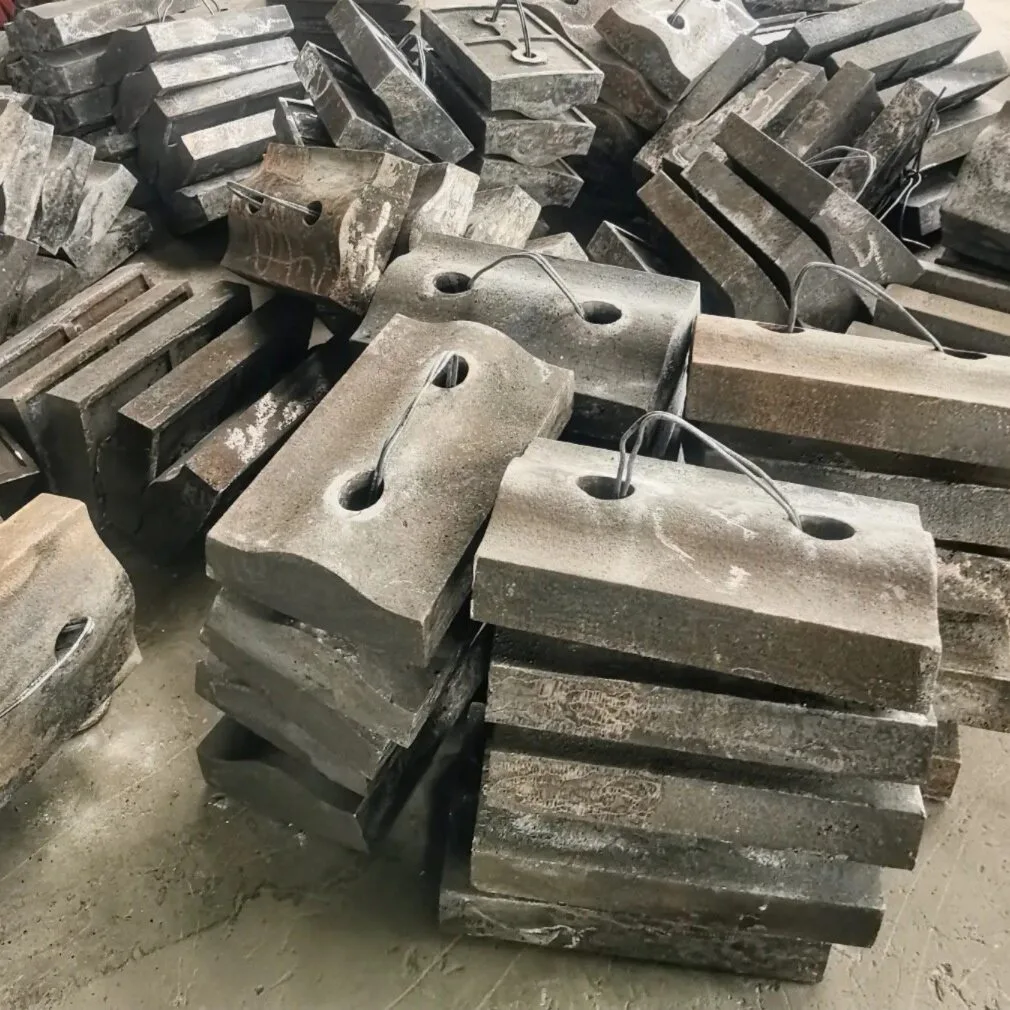
What the liner is doing
A ball mill is a pressure vessel that happens to grind. The shell is thick steel, the charge is several hundred tonnes of balls and ore, and the only thing between the two is the liner. When people talk about mill availability, they are usually talking about liners: how long they last, how fast they can be changed, and whether the shell behind them is still sound.
This note is about reading liner wear. It is written for the person who has to decide, on a Tuesday, whether the mill comes down this quarter or next.
A liner has three jobs and they pull against each other.
It protects the shell from impact and abrasion. It lifts the charge. And it shapes the motion of the load inside the mill, which decides how the grinding actually happens.
Lifting is the part that surprises people outside the industry. A smooth liner lets the charge slide; a liner with high lifter bars throws it. Neither is better in general. A coarse grind wants a cataracting charge that drops onto the toe; a fine grind wants more of the load rolling. Changing liner profile changes the product, sometimes more than changing the ball charge does.
So liner selection is not only a wear question. When a plant switches profile to get longer life and the product size shifts, the mill is telling you the two cannot be separated.
The wear patterns that matter
Liner wear is not uniform, and where it is heaviest tells you what is happening.
**Wear at the charge toe** is normal abrasion from the rolling load. It shows as a smooth, wide depression across the face of the liner. This is the wear you plan for.
**Wear at the impact zone** is deeper and more local. It means the charge is dropping harder than the liner was designed for: too high a lifter, too large a ball size, too low a filling degree. A liner that is cratered at the impact point will fail early regardless of how thick the rest of the face still is.
**Grooving or channeling** along the length of the mill points to a ball size distribution problem or to a feed that is segregating. The charge is running in lanes rather than turning as a mass.
**Edge wear at the shell ends** is often a sign that the end liners and the cylinder liners are not matched. Material that should be turned back into the charge is being flung against the end wall.
**Bolt hole wear** is the one that gets dangerous. Once a liner starts moving on its bolts, the holes in the shell become oval, and a shell with oval bolt holes is a much bigger repair than a liner change. Any liner that has been running loose should be treated as a shell inspection, not just a liner replacement.
Thickness surveys
The standard practice is a thickness survey at every reline, on a grid, recorded against the mill position. A single reading at the thinnest point is not a survey. The point of the grid is to show the shape of the wear, which is what tells you whether the profile is right.
Three numbers come out of a good survey: the minimum remaining thickness, the position of that minimum, and the wear rate since the last survey. The third is the one that plans shutdowns. A wear rate of a few millimetres per thousand hours, measured against the remaining thickness, gives a date. A plant that plans relines from a date rather than from a noise complaint gets to choose its shutdown window.
Where the mill has been running the same profile for years, the survey also shows whether the shell has any deformation under the liners. A shell that has gone out of round at the trunnion end shows up as uneven liner seating, and no liner will fix that.
Materials, and what they cost you later
Liner material choice usually comes down to three families.
**High-chrome white iron** gives the best abrasion resistance and the least tolerance for impact. It is the common choice for cylinder liners in fine grinding, where the charge rolls rather than drops.
**Manganese steel** work-hardens under impact and is the usual choice where large balls or coarse feed are involved. It wears differently: the surface hardens, and when the hardened layer is worn through, the wear accelerates.
**Rubber and composite liners** are lighter, quieter and faster to change, and they suit mills where impact is low and the liner is changed often. Their limit is temperature and the size of the charge.
The material decision has a second half that is easy to skip: how the liner is fastened and what sits behind it. Backing compound or a close-fitting backing plate decides how evenly the load is spread onto the shell. A liner that is bolted hard against a shell with a gap behind it will crack, whatever it is made of.
The reline itself
A reline is a logistics job as much as a mechanical one. Liners are heavy, the mill is confined, and the work is done against a fixed shutdown window.
The sequence that causes trouble least often is: survey the shell first, not the liners; replace the end liners and the cylinder liners in one campaign if the survey says both are near the limit; check every bolt hole before fitting new liners; torque in the pattern the mill maker specifies, in stages, and re-torque after the first running period.
One detail worth writing into the shutdown plan: the order of liner removal sets the order of installation. Mills that come apart from the charge end and go back together from the discharge end save a day, because the heavy end liners are handled once.
Where new parts come from
Plants replace liners from stock, from the original mill maker, or from a machine shop working to the drawing. The third route exists for the mills whose original supplier has gone, and for the liner patterns that are no longer cataloged.
For that route the useful input is the old liner itself, measured before it is scrapped: bolt hole positions, thickness at the unworn edge, the profile of the working face and the radius of the ends. A liner is a simple part with a lot of position data, and the position data is what fails first when it is copied from a worn example rather than measured.
The same applies to the parts around the liner: end liners, grates, trunnion liners and the bolts. A reline that reuses bolts which have been stretched once will find the loose liner problem again before the next survey.
What to send, and what to expect
For a liner inquiry: the mill size and type, the liner position (cylinder, feed end, discharge end), a drawing or the worn part, the material if the original certificate exists, quantity, and the shutdown date you are working to.
Liner sets are needed in quantities rather than singles, and the date moves with the quantity and with whether the blank has to be cast to a pattern that no longer exists. Where the pattern is gone, the old part is measured and a new drawing is issued for approval before anything is cast. A single piece runs 8–12 weeks from an approved drawing; a full set is quoted as a set.
Bolts, backing and the joints between liners
The liner itself is the visible wear part, and the fastening is what decides whether it stays in place.
Bolts on a mill liner work loose for three reasons: the bolt stretched at the last reline and was reused, the bolt hole in the shell is oval from a previous loose liner, or the liner is seating on a high spot rather than on the shell. All three show up as the same symptom at the next survey, which is why the bolt record matters.
The practical rule is to replace bolts at every reline where the mill has a history of looseness, and to check the bolt holes in the shell with a gauge rather than by eye. An oval hole that is reused will loosen the new liner within weeks.
Backing compound or backing plates spread the load between the liner and the shell. A liner that is bolted hard against a shell with a gap behind it will flex under impact and crack from the bolt holes outward. The gap is easy to check during the survey and almost impossible to see after the mill is closed up.
Joints between adjacent liners matter for the same reason. A liner that stands proud at its edge takes the impact load on the edge rather than on the face, and it wears to a step. When the step appears at the same position on every reline, the liner pattern is wrong for the mill, not the material.
Grates and the discharge end
On a grate discharge mill, the grates are liners with holes, and they wear at the hole edges first. A grate that has worn its holes oversize passes coarse material that the circuit then has to handle downstream. The product size signal that gets blamed on the ball charge is often the grate.
Grate slots also plug. A plugged grate raises the slurry level in the mill and changes the charge behavior, which shows as reduced throughput and a different sound. Slots that are worn round rather than parallel are the sign that the grate is due.
Planning the reline window
The reline window is usually fixed by production, so the plan has to fit the window rather than the other way round. Three items decide whether it fits.
The liner set has to be on site before the mill stops, with the bolts and the backing material. A set that arrives in two deliveries turns a five-day shutdown into two.
The survey has to be done before the set is ordered, not during the shutdown. A plant that orders a standard set and surveys during the reline finds the shell problems after the money is committed.
The crane and the access have to be checked against the heaviest liner in the set. A liner that is heavier than the crane's working load at that radius is a liner that will be handled twice as slowly.
**Internal links to wire in:** `/industries/mining`, `/products/ball-mill-shell`, `/inspection`, `/delivery`.
These notes describe processes we actually run. If you have a part to quote, send the drawing and we will answer with the process, the lead time and the tolerance we can hold.
Send drawing, get a quote